

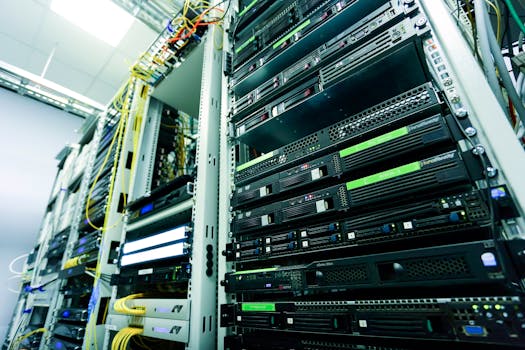
Regina, Saskatchewan — A large-scale data centre project proposed for the Rural Municipality of Sherwood, adjacent to Regina, is drawing significant attention for its potential economic impact and its resource demands. Backed by Bell Canada and supported by the provincial government, the project is being promoted as a multi‑billion‑dollar technology investment that could position Saskatchewan as a hub for artificial intelligence and cloud infrastructure. At the same time, questions persist over how much electricity and water the facility will require, how those resources will be sourced, and what the associated environmental and health impacts might be.
Project overview and timeline
- Proponent and location: Bell Canada has been identified as the lead proponent for a hyperscale AI and cloud data centre complex in the RM of Sherwood, just outside Regina.
- Scale and capacity: Public statements and reporting describe a buildout targeting roughly 300 megawatts (MW) of IT load as the project scales, placing it among the larger data centre developments contemplated in Canada.
- Investment and jobs: Provincial announcements and media reports have framed the development as part of an estimated $12 billion economic opportunity, including direct capital spending, supply-chain activity, and induced economic effects. Job estimates cited publicly point to more than 1,600 positions across construction and operations over the life of the project. Government and industry briefings indicate construction could begin as early as 2026, pending permitting and utility arrangements.
Energy demand: how much power and from where?
- Continuous load: A 300 MW IT load operating at high utilization can draw 300 MW around the clock. At 8,760 hours per year, that equates to roughly 2.63 terawatt-hours (TWh) of electricity annually. For context, SaskPower reported provincial electricity sales on the order of several tens of TWh annually; a facility of this size would represent a material share of grid demand if built to full capacity.
- PUE considerations: The total facility load depends on its Power Usage Effectiveness (PUE). Modern hyperscale designs target PUE between about 1.15 and 1.3 in cool climates. At a PUE of 1.2, a 300 MW IT load implies approximately 360 MW total facility power and roughly 3.15 TWh/year of consumption.
- Emissions intensity: Saskatchewan’s grid has been transitioning, but still includes natural gas and coal alongside growing wind and solar. The lifecycle greenhouse gas footprint of the data centre will depend on SaskPower’s generation mix during the operating years. If average grid intensity were, for illustration, 500 g CO2e/kWh, a 3.15 TWh/year facility could be associated with roughly 1.6 million tonnes CO2e annually absent dedicated clean power procurement. If the operator contracts for new renewables or low‑carbon baseload (and if incremental clean capacity truly displaces fossil generation), that footprint could be significantly reduced.
- Grid integration: Large data centres often require new high‑voltage interconnections and sometimes on‑site or contracted generation. SaskPower and the proponent have not yet publicly disclosed the final interconnection design, curtailment provisions, or any behind‑the‑meter generation or storage. Stakeholders are seeking clarity on whether new generation will be procured, how quickly, and with what technology mix.
Water usage and cooling strategies
- Cooling options: Data centres in prairie climates typically evaluate air‑side economization, adiabatic cooling, closed‑loop evaporative towers, or liquid cooling at the rack/chip level. Water usage varies widely by technology and operations.
- Benchmarks: Industry water usage effectiveness (WUE) benchmarks range roughly from:
- Air‑cooled with adiabatic assistance: about 0.1–0.3 litres per kWh delivered to IT equipment (L/kWh) under optimized operation.
- Evaporative cooling towers for large campuses: 0.5–2.0 L/kWh, depending on design and weather.
- Liquid cooling with dry coolers: potentially near-zero water most of the year, with seasonal adiabatic peaks.
- Applying benchmarks: Using a mid‑range 0.5 L/kWh for a hypothetical 3.15 TWh/year facility would imply ~1.6 billion litres (1.6 million m³) of annual water use. With advanced air‑side/free cooling and low WUE (e.g., 0.15 L/kWh), usage might fall to ~470 million litres/year. Conversely, a more evaporative‑heavy design could exceed 2 billion litres/year. Final numbers depend on system choice, redundancy, and operating profile.
- Source and discharge: Questions before local authorities include whether water would be supplied from municipal systems, dedicated intakes, or reclaimed sources; how blowdown and treatment would be handled; and whether non‑potable or recycled wastewater could substitute to reduce strain on potable supplies. Stakeholders have also asked for details on peak‑day withdrawals during heat events, when water systems are most stressed.
Local environmental and health considerations
- Air emissions: Direct on‑site emissions are typically limited to backup diesel generators used during outages and regular testing. Modern Tier III/IV facilities can have dozens to hundreds of megawatts of backup capacity. Communities often request commitments on ultra‑low sulfur diesel, limited test hours, dispersion modeling, and eventual transition to lower‑emission backup (e.g., HVO or gas turbines with SCR, or fuel cells).
- Noise: Cooling equipment and standby generators can produce continuous and episodic noise. Local permitting commonly imposes daytime and nighttime sound limits at property boundaries; detailed acoustic studies and mitigation (barriers, equipment selection) are standard asks.
- Heat island effects: Large campuses can contribute localized heat; design measures include building orientation, reflective surfaces, vegetative buffers, and heat‑recovery integration where feasible.
- Water quality: If evaporative systems are used, chemical treatment, drift eliminators, and blowdown handling require oversight to prevent impacts on local waterways.
- Construction impacts: Multi‑year buildouts bring traffic, dust, and worker accommodation pressures; typical mitigations include dust control, traffic management, and staged works scheduling.
Economic and community impacts
- Jobs and procurement: Government statements reference more than 1,600 jobs spanning construction trades, electrical and mechanical contractors, and a smaller cohort of permanent operations, facilities, and network roles. Hyperscale facilities commonly support dozens to low‑hundreds of full‑time operations roles per campus phase.
- Tax base and diversification: Officials have framed the project as a way to diversify Saskatchewan’s resource‑heavy economy into digital infrastructure, increasing commercial tax assessment and demand for local services and suppliers.
- Digital infrastructure externalities: Local hosting of AI and cloud workloads can reduce latency for Prairie users, attract ancillary technology businesses, and spur training partnerships with post‑secondary institutions.
Arguments for the project
- Economic diversification and jobs: A multi‑billion‑dollar capital program with more than 1,600 cumulative jobs and long‑term operations roles would inject spending into the Regina region and expand the tax base.
- Grid synergies and innovation: Large, steady loads can underpin new utility‑scale wind, solar, and storage procurements if paired with long‑term power purchase agreements, potentially accelerating grid decarbonization.
- Efficient operations in a cool climate: Saskatchewan’s climate enables extensive free‑cooling hours, lowering both energy and water intensity compared to hotter regions.
- Digital competitiveness: Establishing a hyperscale foothold could catalyze additional data‑driven investment, research partnerships, and improved connectivity for Prairie industries (agriculture technology, mining, logistics).
Arguments against the project
- Significant electricity demand: At full buildout, annual consumption measured in TWh would be material for SaskPower’s system. Without dedicated low‑carbon supply, associated emissions could be high relative to provincial climate targets.
- Water stress risk: Depending on cooling design, annual withdrawals could reach hundreds of millions to over a billion litres, raising concerns during drought periods and heat waves when municipal systems are strained.
- Backup generator emissions and noise: Diesel gensets, even with modern controls, can contribute NOx, particulate matter, and episodic noise during testing and outages. Nearby residents often request stricter limits and transparent testing schedules.
- Opportunity cost and rate impacts: Grid upgrades and new generation needed to serve a large load may affect ratepayers if costs are socialized. Communities have asked for assurances that private beneficiaries bear incremental interconnection and capacity costs.
- Land use and biodiversity: Campus footprints, access roads, and substations can affect peri‑urban farmland and local ecosystems unless sited and buffered carefully.
What to watch next
- Environmental assessment disclosures: Detailed filings should specify projected annual and peak electricity demand, PUE and WUE targets, water sources, blowdown volumes, noise contours, generator testing hours, and mitigation plans.
- Power procurement: Any combination of SaskPower supply contracts, behind‑the‑meter generation, energy storage, and renewable PPAs will shape the project’s carbon intensity and potential system impacts.
- Water strategy: Commitments to reclaimed water, seasonal operating strategies, and dry/adiabatic cooling will determine overall withdrawals and drought resilience.
- Community benefits: Training, local procurement targets, transparent air/noise monitoring, and emergency response coordination are key themes raised by residents and local experts.
Sources
- CBC: The true cost of AI data centres (energy and water context for hyperscale AI) – https://www
Sed nec blandit nibh. Pellentesque commodo suscipit gravida. Sed sit amet ex sed mi dignissim elementum in ut quam. Vivamus laoreet non mauris eget mattis. Nam turpis orci, consectetur vel accumsan sed, condimentum at sapien. Nunc ut egestas neque, eu hendrerit lacus. Suspendisse fermentum congue dui nec fringilla. Duis volutpat nunc lectus. Suspendisse potenti. Suspendisse egestas venenatis nunc. Donec at laoreet lacus.
Leave a Reply